-
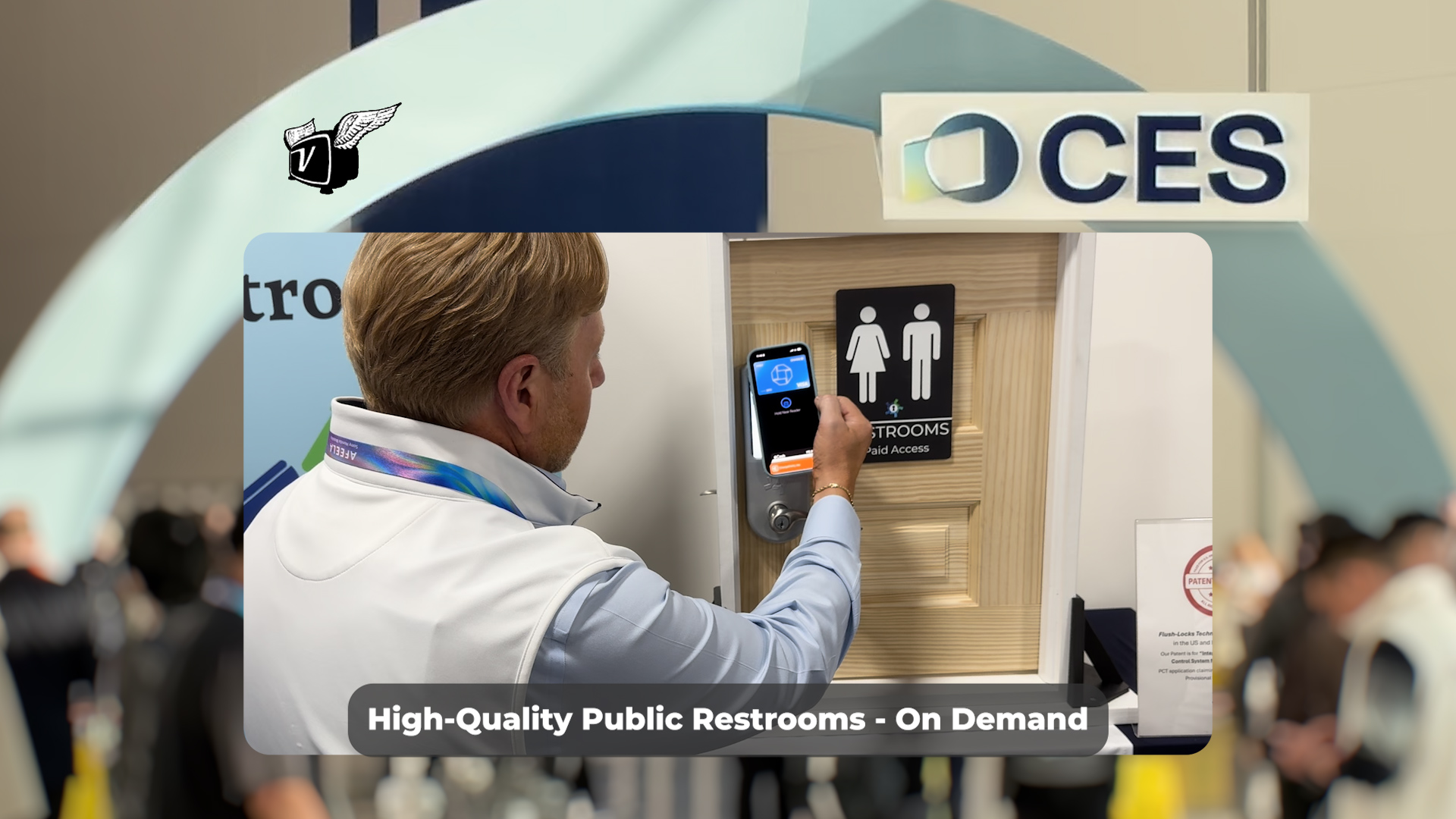
High-Quality Public Restrooms – On Demand
There is nothing quite like the panic of needing a restroom in a busy city, only to be met with locked doors and strict “Customers Only” signs. At CES 2026, Floyd Freeman, co-founder of Boulder, Colorado-based Flush Locks, explains how he and his team are turning this urban friction point into a revenue opportunity for…
-

Extending Wi-Fi to Hard-to-Reach Places #CES2025
Wi-Fi HaLow is a potential game-changer for broadband service providers needing to extend their signals to hard-to-reach places. It’s a long-range Wi-Fi technology based on the IEEE 801.11ah standard. Example applications range from single-family residences with massive yards to homeowner associations with sensor needs, to commercial and industrial buildings to the unique IoT needs of…
-

A Dam Alternative on a House-by-House Basis – #CES2022
Could water reuse in the form of decentralized water treatment reduce the need for water storage? It could be if the technology from Hydraloop becomes mainstream. With a 4 to 7-year payback, and low-maintenance costs, treatment on a per-building basis means less treatment at centralized plants and reduced water use. In the above video interview,…
-

Hygiene Today & Automatic Health Monitoring Tomorrow #CES2021
Could the future of health monitoring start in one’s bathroom? The answer is yes if Toto’s plans for its toilets evolve as described by Toto USA’s Bill Strang. It is an evolutionary path that starts with today’s touchless toilet experience. Strang, President of Corporate Strategy, E-Commerce, and Customer Experience, discusses Toto’s latest toilet seat offerings,…
-

The Blockchain Home Surveillance Camera #CES2020
At CES2020, IoTex built on its CES2019 debut with a home surveillance camera produced in partnership with Tenvis. IoTex’s open-source blockchain technology secures the privacy of the end-user so that Tenvis or IoTex can’t see their customers’ personal information and video streams. The camera specifications are especially impressive for a $49 device. According to this…
-

Why Charge When Wireless Will Work? #CES2020
Using infrared optics that are invisible to the human eye, Wi-Charge demonstrated wireless power transfer of up to 2.25 Watts from a central hub to remote devices across a room. Using beam steering, they are able to dynamically direct the power and optimize efficiency, as evidenced by the moving train in their CES Unveiled booth.…
